The new war room
Militaries already use AI to detect what humans might miss. Now they also want an advice engine for commanders to consult in battle.
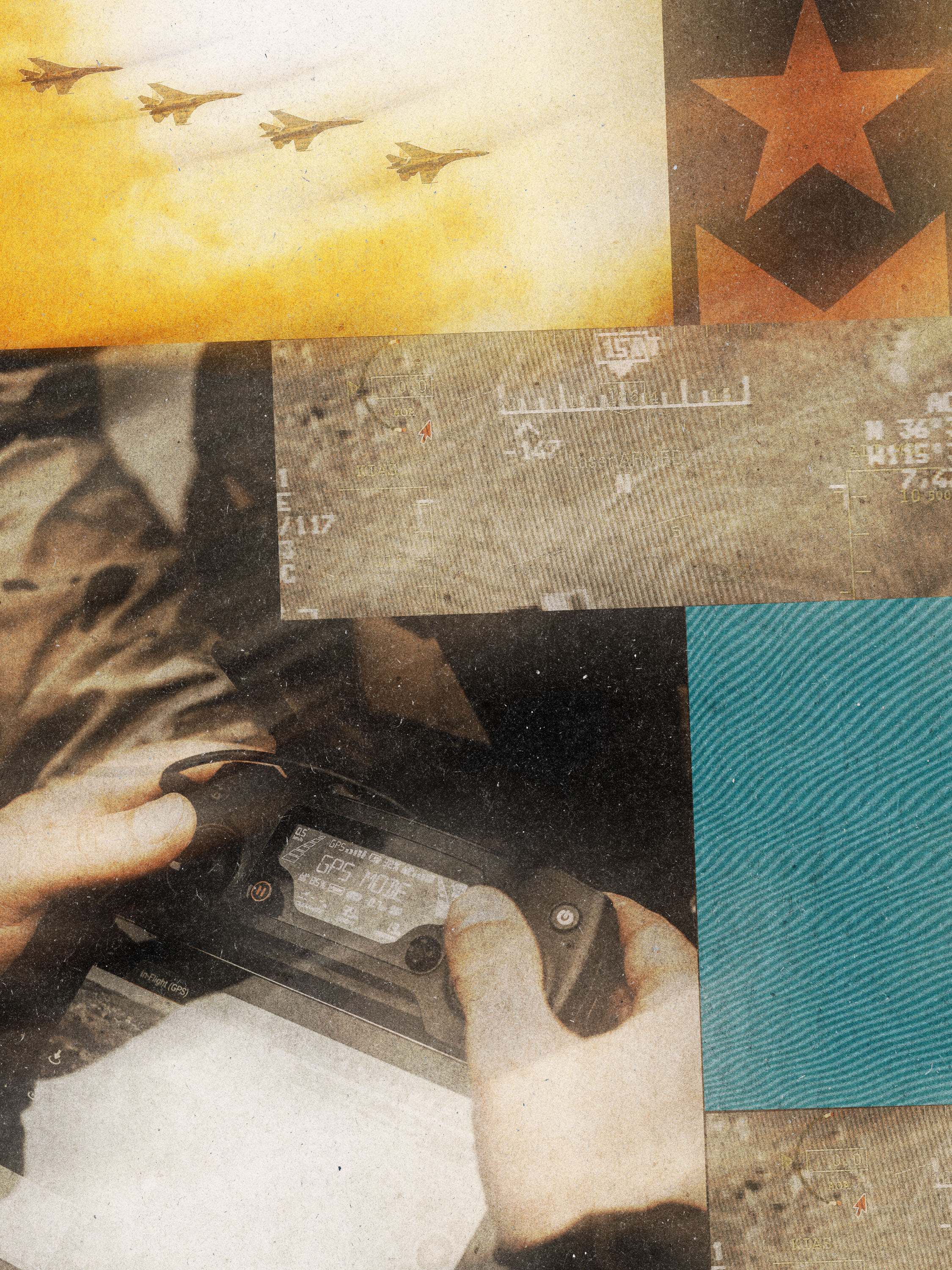
To call the conflict in Iran the first “AI war” would be, in many ways, incorrect. Algorithms that scour hours of surveillance footage and pick out, say, trucks with mounted machine guns date back to the war in Afghanistan. Ukraine has built drones that use AI to navigate autonomously. Israel has used AI systems to identify possible targets from intelligence data.
Here’s what is new, in Iran and elsewhere: conversational AI systems that commanders turn to not just for analysis, but for advice. Unlike previous AI technologies, these advice engines are built on large language models. And they’re already reshaping how militaries share intelligence, work with Big Tech, and make life-and-death decisions.
A decade ago, AI tools started to automate the work a junior intelligence analyst might do—picking out an important signal on a social media or satellite feed from lots of noise. Systems like the US military’s Maven, built mainly on technology created by the surveillance giant Palantir, fed that sort of analysis into tools that allow commanders to select a target to bomb halfway around the world, all through clean interfaces that look more like business software than the machinery of war.
Now large language models are making these systems more interactive and capable of doling out advice. One US defense official told MIT Technology Review that today’s military personnel might give chatbots a list of potential targets to help decide which to strike first. Even though the Pentagon recently labeled Anthropic a supply chain risk, the company’s tool Claude has become so intertwined in military operations that the government says it needs six months to get rid of it.
And it’s not just the US putting chatbots at commanders’ fingertips; China is commissioning similar tools, according to recent analysis by Georgetown University’s Center for Security and Emerging Technology.
While older AI systems will still be used to gather and analyze information, it’s clear that AI-generated advice is something militaries around the world want more of, and take seriously.
One problem with this paradigm shift will be obvious to anyone who has used generative AI: It produces different outputs even when you use the same prompt, and its unscripted recommendations are not always useful, precise, or correct. People who use it at work are expected to vet its outputs. But if they’re under enough pressure—like, say, the need to clarify which target to strike in the next five minutes—they may cut corners.
AI-generated errors are only part of the problem. Military experts have also warned that officers who chat with AI systems that compress the world into a neat battlefield dashboard might trust the system too much, or that such systems might give tech companies undue influence over what information gets seen. And while the military rushes to adopt an effectively brand-new technology, the public has no meaningful way to exercise oversight of its use, or to scrutinize its possible role in mistakes (indeed, a January memo from the Pentagon described “responsible AI,” which is built upon these concepts, as “utopian Idealism”).
The OpenAIs of the world, though, see an opportunity to win lucrative defense contracts. And the Pentagon, which wants AI companies to offer the military the best models they can, even plans to allow companies to train new models on classified military data. That would mean sensitive intelligence like surveillance or battlefield assessments could go into the models themselves, presenting new security risks. It would also bring Silicon Valley closer to the Pentagon than ever before.
Deep Dive
Artificial intelligence
OpenAI is throwing everything into building a fully automated researcher
An exclusive conversation with OpenAI’s chief scientist, Jakub Pachocki, about his firm's new grand challenge and the future of AI.
Want to understand the current state of AI? Check out these charts.
According to Stanford’s 2026 AI Index, AI is sprinting, and we’re struggling to keep up.
Musk v. Altman week 1: Elon Musk says he was duped, warns AI could kill us all, and admits that xAI distills OpenAI’s models
Musk kept his cool, and OpenAI’s lawyer bulldozed him with piercing questions about his motivations for suing the company.
10 Things That Matter in AI Right Now
MIT Technology Review's authoritative overview of the 10 technologies, emerging trends, bold ideas, and powerful movements in AI in 2026.
Stay connected
Get the latest updates from
MIT Technology Review
Discover special offers, top stories, upcoming events, and more.